Join our fixed departure treks.  5.0 of 553 reviews
  5.0 of 203 reviews
5.0 of 553 reviews 5.0 of 203 reviews 5.0 of 553 reviews 5.0 of 203 reviews 
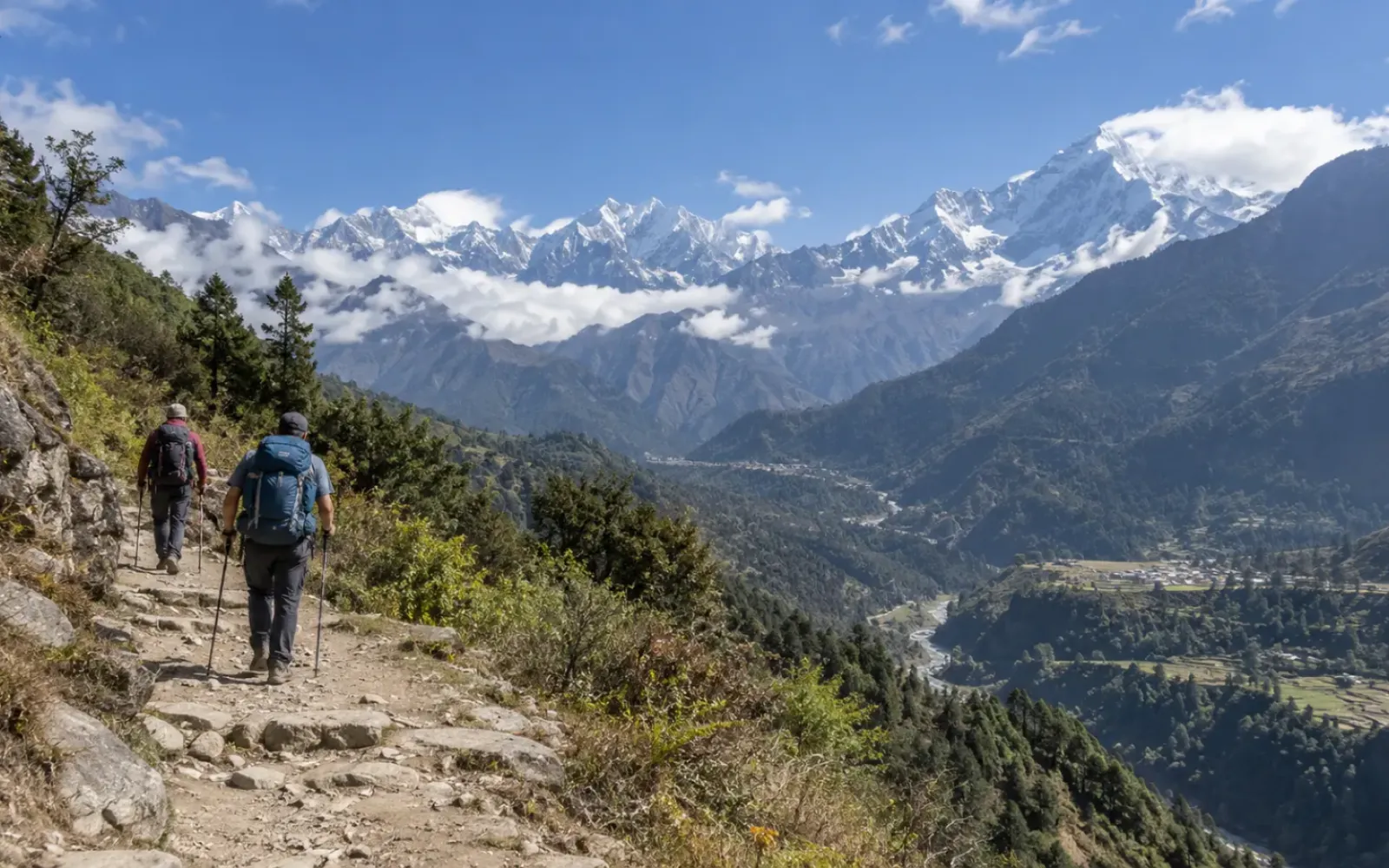
Ask ten people for the best time to visit Nepal and October will probably win.
That answer is not wrong. It is just incomplete.
October is excellent for many Himalayan treks, but it is also one of the busiest periods of the year. July is a poor choice for many classic trekking routes, yet it can make very good sense in Upper Mustang. January is too cold for some high-altitude itineraries, but it can be an excellent month for Kathmandu, Pokhara, lower-elevation walking and travelers who prefer quiet trails.
So the useful question is not simply:
What is the best time to visit Nepal?
It is:
What is the best time for the part of Nepal you want to visit and the type of trip you want to do?
For most first-time visitors planning a Himalayan trek, October to November and March to April are the easiest periods to recommend.
But those are not the only good months.
The right season depends on your route, altitude, tolerance for cold or rain, interest in photography or festivals, transportation plans and how much flexibility you have if the weather changes.
This guide explains those trade-offs month by month.
| Your priority | Start with |
|---|---|
| Best overall period for classic Himalayan trekking | October to November |
| Spring trekking with warmer days | March to April |
| Rhododendron forests | March to April, depending on altitude and the year |
| Sharp post-monsoon mountain views | October to November |
| Fewer trekkers | Late November, early December, late February or early March |
| Everest Base Camp | March to May or October to November |
| Annapurna Base Camp | March to May or October to November |
| Manaslu Circuit | Spring and autumn |
| Langtang Valley | Spring and autumn |
| Upper Mustang | Spring through autumn, including monsoon months |
| Monsoon trekking | Upper Mustang and selected trans-Himalayan routes |
| Peak climbing | Mainly spring and autumn, depending on the objective |
| Kathmandu and cultural touring | Possible throughout the year |
| Chitwan and Bardia | Generally more comfortable from autumn through winter |
| Photography | October to November for clearer long-distance mountain views |
| Quieter winter travel | December to February on suitable routes |
These are planning windows, not weather guarantees.
Nepal's mountains create their own conditions. A month that is comfortable in Kathmandu can be freezing at 4,500 meters. Heavy rain around Pokhara does not mean Upper Mustang is experiencing the same weather.
That is why choosing the route first is often more useful than simply choosing a season.
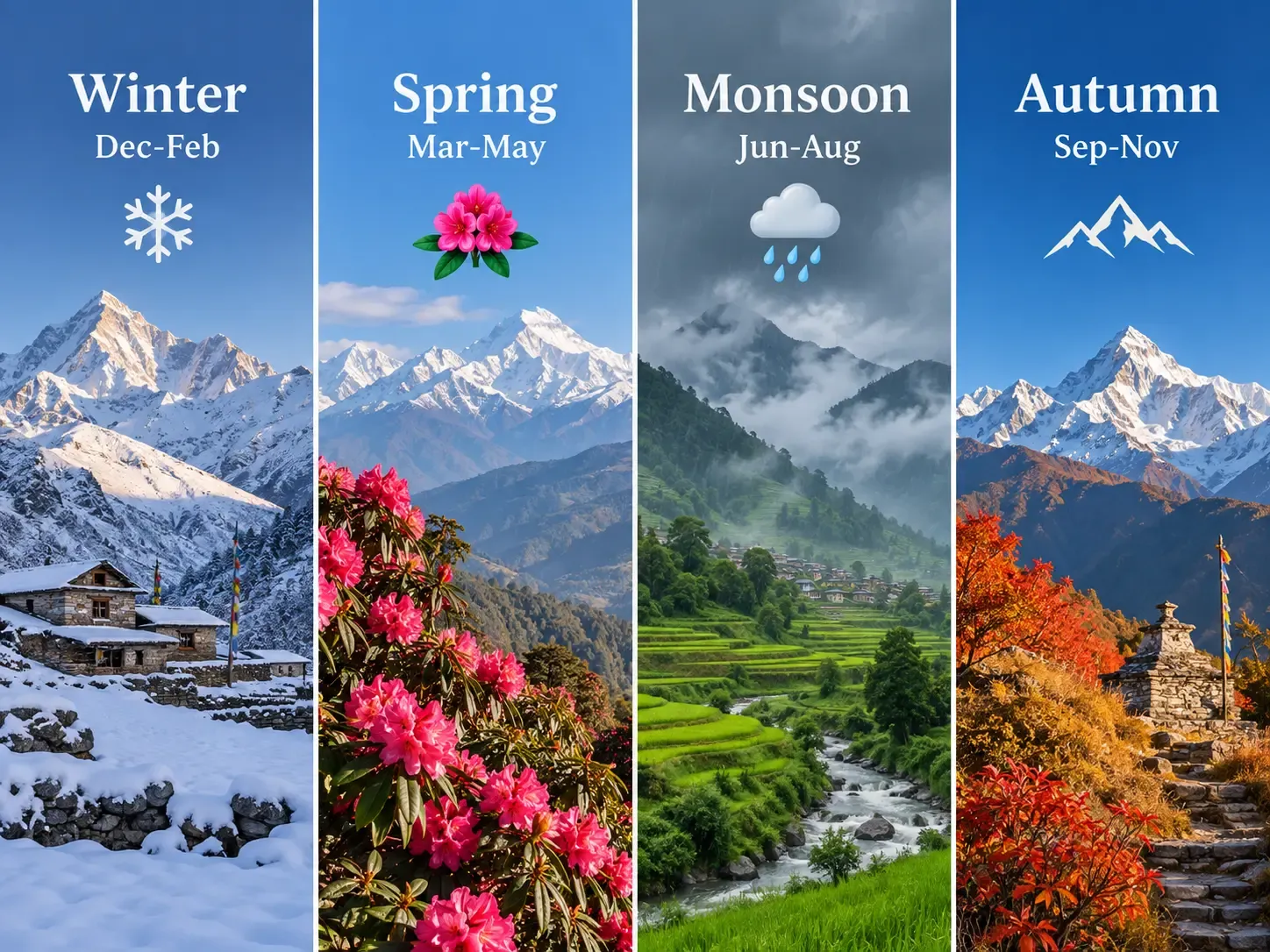
Travel conditions in Nepal change significantly throughout the year. Use this month-by-month overview to compare typical conditions, crowd levels and the types of trips each period is best suited to.
| Month | Typical Conditions | Crowds | Particularly Good For | Think Twice If |
|---|---|---|---|---|
| January | Dry, clear and cold, especially at higher elevations | Low | Cultural tours, lower-altitude treks, winter views and quieter trails | Your trek depends on crossing a high mountain pass |
| February | Winter conditions early in the month, becoming gradually milder later | Low | Quiet trekking, cultural tours and wildlife trips | You expect winter conditions to have completely disappeared |
| March | Warmer spring weather with increasing colour in forested trekking areas | Moderate | Everest Base Camp, Annapurna Base Camp, Langtang, Poon Hill and spring trekking | Perfectly clear long-distance mountain views are your only priority |
| April | Warm trekking days with established spring conditions | Moderate to high | Major trekking routes, climbing trips and rhododendron areas | You strongly dislike the possibility of spring haze |
| May | Warm, increasingly humid and less predictable later in the month | Moderate | Higher trekking routes, climbing trips and early-May departures | You require completely predictable weather |
| June | The monsoon begins developing across much of Nepal | Low | Upper Mustang and cultural travel with some itinerary flexibility | You want consistently dry conditions on classic trekking routes |
| July | Wet, humid and green across most monsoon-affected regions | Low | Upper Mustang and selected rain-shadow trekking routes | Your itinerary depends heavily on clear skies or exact transport timings |
| August | Full monsoon conditions across much of Nepal | Low | Rain-shadow trekking, green landscapes and cultural travel | You have a tightly scheduled mountain itinerary with little flexibility |
| September | Conditions can remain wet early in the month but generally improve later | Rising | Late-September trekking as conditions transition toward autumn | You assume early September has the same conditions as October |
| October | Generally dry with strong mountain visibility across many trekking regions | High | Everest Base Camp, Annapurna Base Camp, Manaslu, Langtang and first-time Nepal treks | Quiet or nearly empty trails are a major priority |
| November | Mostly dry and clear, becoming colder as the month progresses | High early in the month, gradually decreasing later | Trekking, photography and quieter late-autumn travel | You are not properly equipped for cold nights at altitude |
| December | Dry winter weather with shorter days and cold nights | Low | Lower-altitude treks, cultural trips, winter scenery and quieter travel | A high-pass crossing must happen on a fixed date |
Use the table to narrow down your options. Then look at the actual route.
October at Everest Base Camp, October in Kathmandu and October in Chitwan are three different travel experiences.
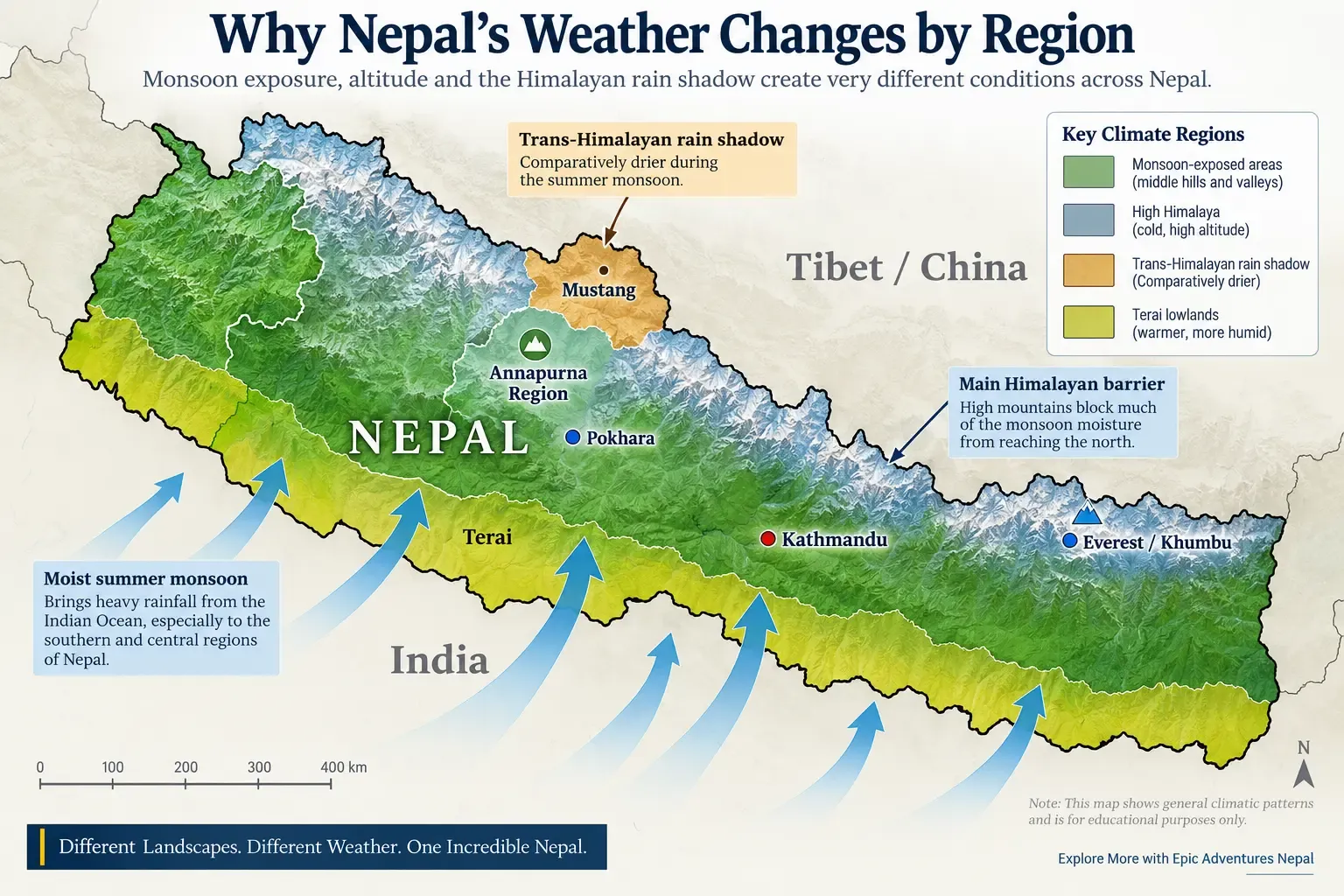
One of the easiest mistakes to make when planning Nepal is checking Kathmandu weather and assuming it represents the country.
It does not.
You can leave Kathmandu in a T-shirt, spend several days gaining altitude and eventually sleep in an unheated trekking lodge where the temperature outside is below freezing.
On another trip, Pokhara may be receiving heavy monsoon rain while the landscape farther north in Mustang remains comparatively dry.
Before we decide whether a month suits a trip, four questions matter.
The highest point reached during the day is important, but your highest sleeping altitude matters even more for comfort.
A trek that reaches 5,000 meters briefly and sleeps much lower is different from an itinerary that spends several nights above 4,000 meters.
Southern Himalayan slopes, the Kathmandu Valley, the Terai and trans-Himalayan areas such as Mustang do not share identical weather.
Rain matters differently if you are spending a day sightseeing in Kathmandu than if you need a mountain flight to keep an itinerary moving.
Some people would happily accept cold nights for quiet trails.
Others have saved for years for one Himalayan holiday and would rather travel during the busiest period if that improves the chance of favorable trekking conditions.
Neither traveler is wrong.
January is often dismissed too quickly.
For Kathmandu, Pokhara, cultural trips, lower-elevation hikes and some lower trekking routes, it can be a very enjoyable month.
The atmosphere is normally much drier than during the monsoon, tourist areas are quieter than in October and settled winter mornings can produce excellent mountain views.
The calculation changes as you climb.
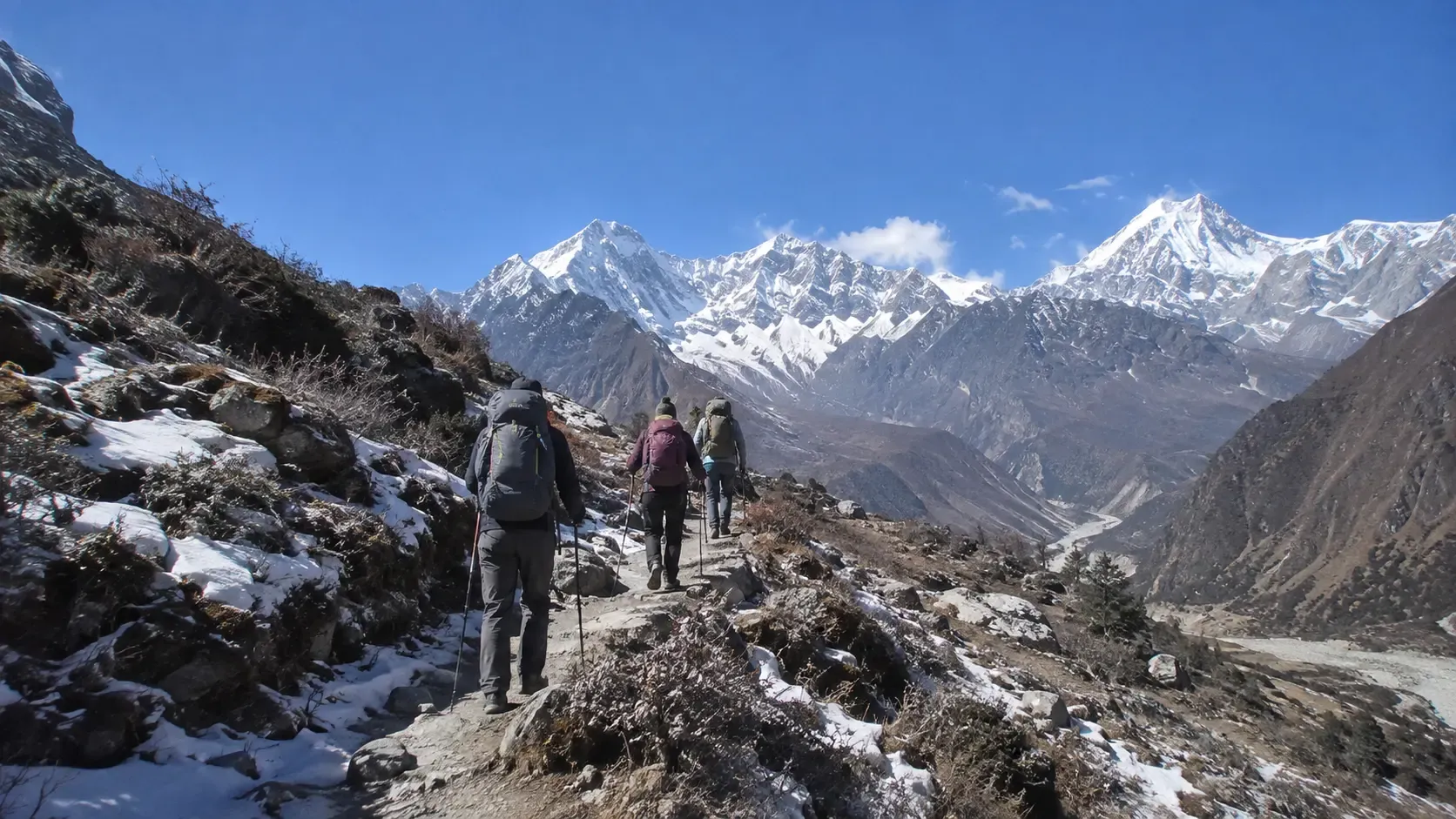
Bedrooms in trekking lodges are commonly simple and unheated. Even when the dining room is warm, your sleeping room may not be.
Above the main villages, nighttime cold becomes part of the trip rather than an occasional inconvenience.
Snow can also change conditions on high passes or exposed trails.
This is particularly important for routes such as the Everest Three High Passes Trek, where pass conditions matter far more than the weather in Kathmandu.
Your entire holiday depends on crossing a high Himalayan pass on one exact day.
Practical rule: pack for your highest sleeping altitude, not for Kathmandu.
February becomes more interesting as the month progresses.
Early February can still feel fully wintery at altitude.
By late February, days begin getting warmer and lower-elevation landscapes start moving toward spring.
The main advantage is space.
You can use established trekking routes before the main spring flow of trekkers arrives.
The compromise is that February is still capable of producing winter conditions higher up.
Snow on exposed sections does not disappear because the calendar says spring is approaching.
For lower and moderate-altitude walking, late February can be particularly useful.
A trip such as the Everest Panorama and Tengboche Trek may suit a traveler who wants an Everest-region experience without committing to the same altitude as Everest Base Camp.
February can also work well for Kathmandu Valley sightseeing and wildlife travel.
March is when Nepal's spring trekking season becomes useful for a much wider range of routes.
Days warm up. Forested trails begin changing. Trekking lodges are active and conditions become less severe than during midwinter.
This is an especially attractive period for routes combining forest, villages and mountain scenery.
The Annapurna Base Camp Trek, Langtang Valley Trek and Everest routes all become strong options.
For travelers interested in shorter spring walking, the Ghorepani Poon Hill Trek is another route where forest scenery is an important part of the experience.
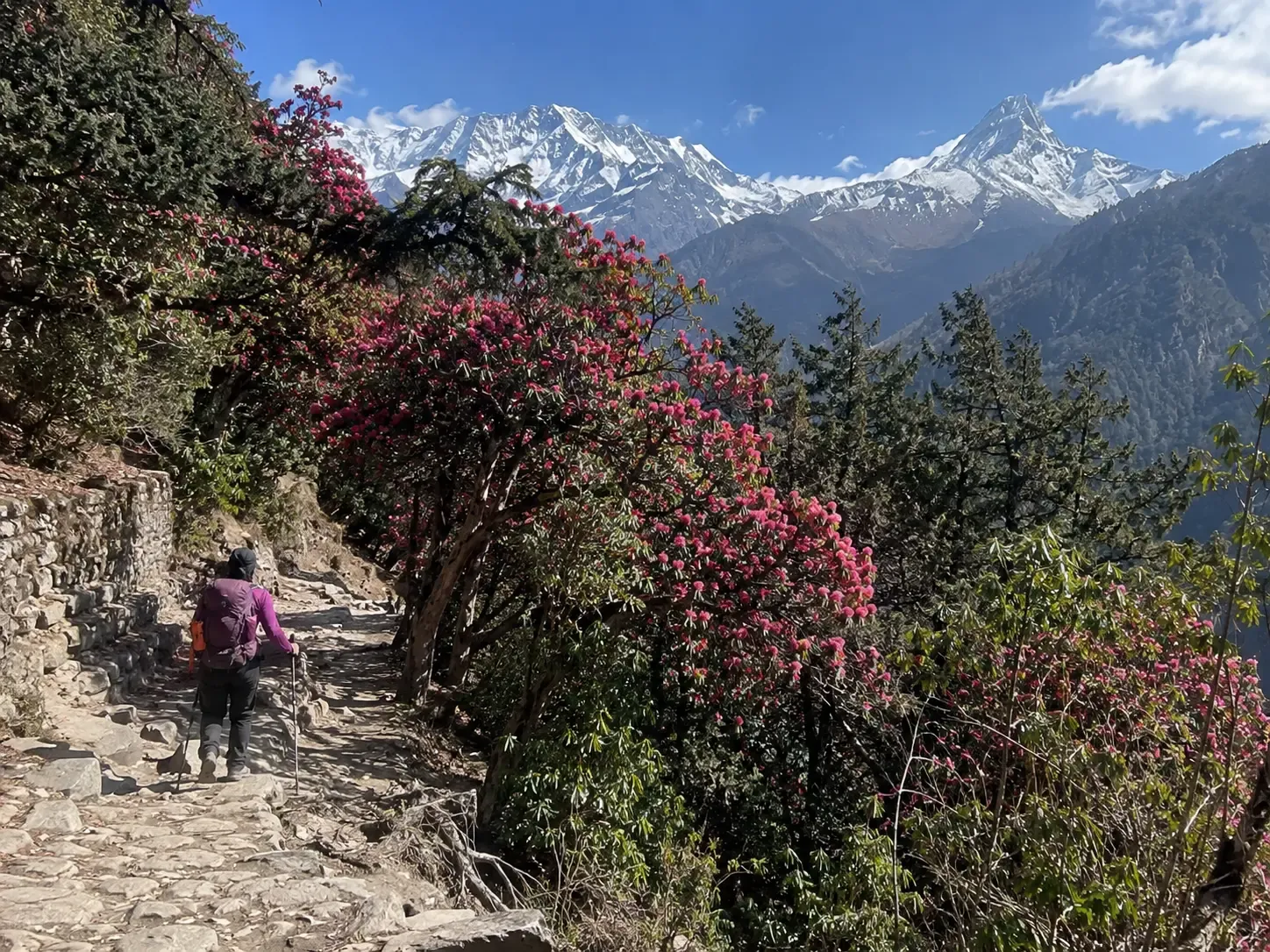
But spring introduces an important distinction:
Warmer weather does not automatically mean clearer weather.
As the season progresses, haze can develop at lower elevations.
A mountain range that looks sharply defined shortly after sunrise can appear much less distinct later in the day.
If photography is important, make the most of clear mornings instead of planning every major viewpoint for the afternoon.
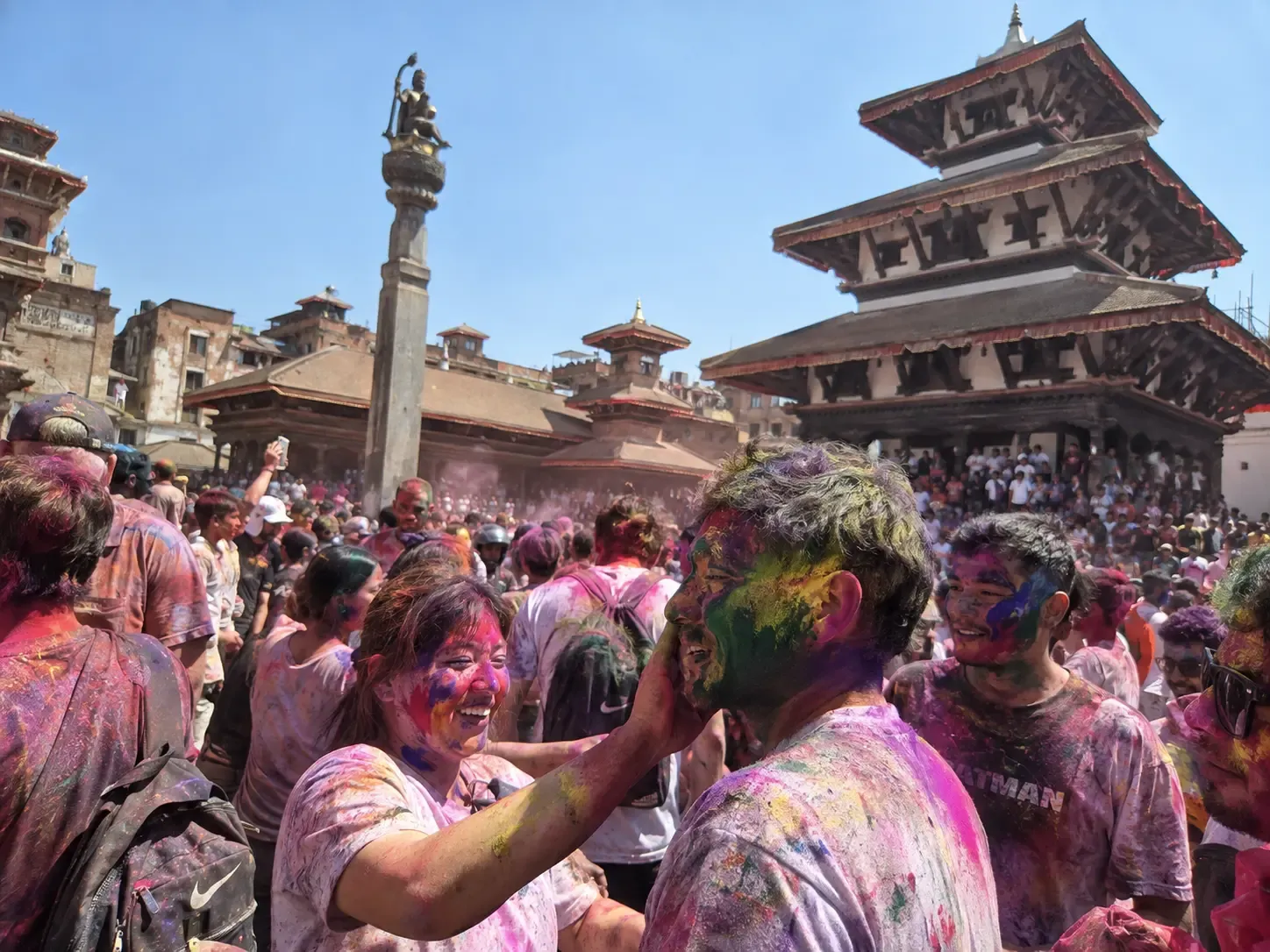
Holi, or Fagu Purnima, usually falls around February or March depending on the lunar calendar.
In busy areas of Kathmandu, the celebration involves coloured powder, water and crowded streets.
For visitors who want to participate, it can be one of the most memorable cultural days of a spring trip.
But you should know what you are walking into.
Wear clothes you do not mind staining and protect phones, cameras and other electronics.
If you would rather not participate, plan your sightseeing and road transfers around the main celebration.
The exact date changes every year, so always check the festival calendar for your travel year.
April offers a very good balance for travelers who want serious Himalayan trekking without winter's deepest cold.
Days are warmer. High trekking routes are active. Forested sections can still be colourful and spring climbing activity is underway on the major peaks.
For many trekkers, April feels easier than late autumn simply because the cold is less severe.
The trade-off is visibility.
April and October are not identical.
By mid to late spring, haze and pre-monsoon atmospheric buildup can reduce long-distance visibility from lower elevations. Afternoon cloud can also become more noticeable.
A practical way to choose is:
Choose April if warmer trekking conditions and spring landscapes matter more.
Choose October or November if sharp post-monsoon mountain visibility matters more.
April is suitable for many major routes, including the Everest Base Camp Trek, Annapurna Base Camp, Langtang and Manaslu.
It is also an important season for climbing.
For trekkers progressing toward a climbing objective such as Mera Peak, remember that pleasant weather in a trekking village tells you very little about conditions higher on a glacier or summit ridge.
May is sometimes written off as though spring suddenly ends on April 30.
It does not.
Early May can still provide good Himalayan travel.
The difference is that the atmosphere becomes increasingly influenced by the approaching monsoon.
Cloud development, afternoon showers and storms become more likely as the month progresses.
That changes how you plan the day.
If you have an important viewpoint, high section or weather-sensitive flight, an early start becomes more valuable.
May also illustrates why a multi-region Nepal trip needs more thought than a single trek.
Conditions may still be comfortable high in the mountains while the southern plains are already extremely hot.
Someone trekking in Everest and then continuing to Chitwan may therefore judge May very differently from someone doing Everest alone.
June is where a simple “Nepal weather” guide stops being very useful.
The monsoon begins affecting much of the country.
On classic trekking routes south of the main Himalayan barrier, you may encounter:
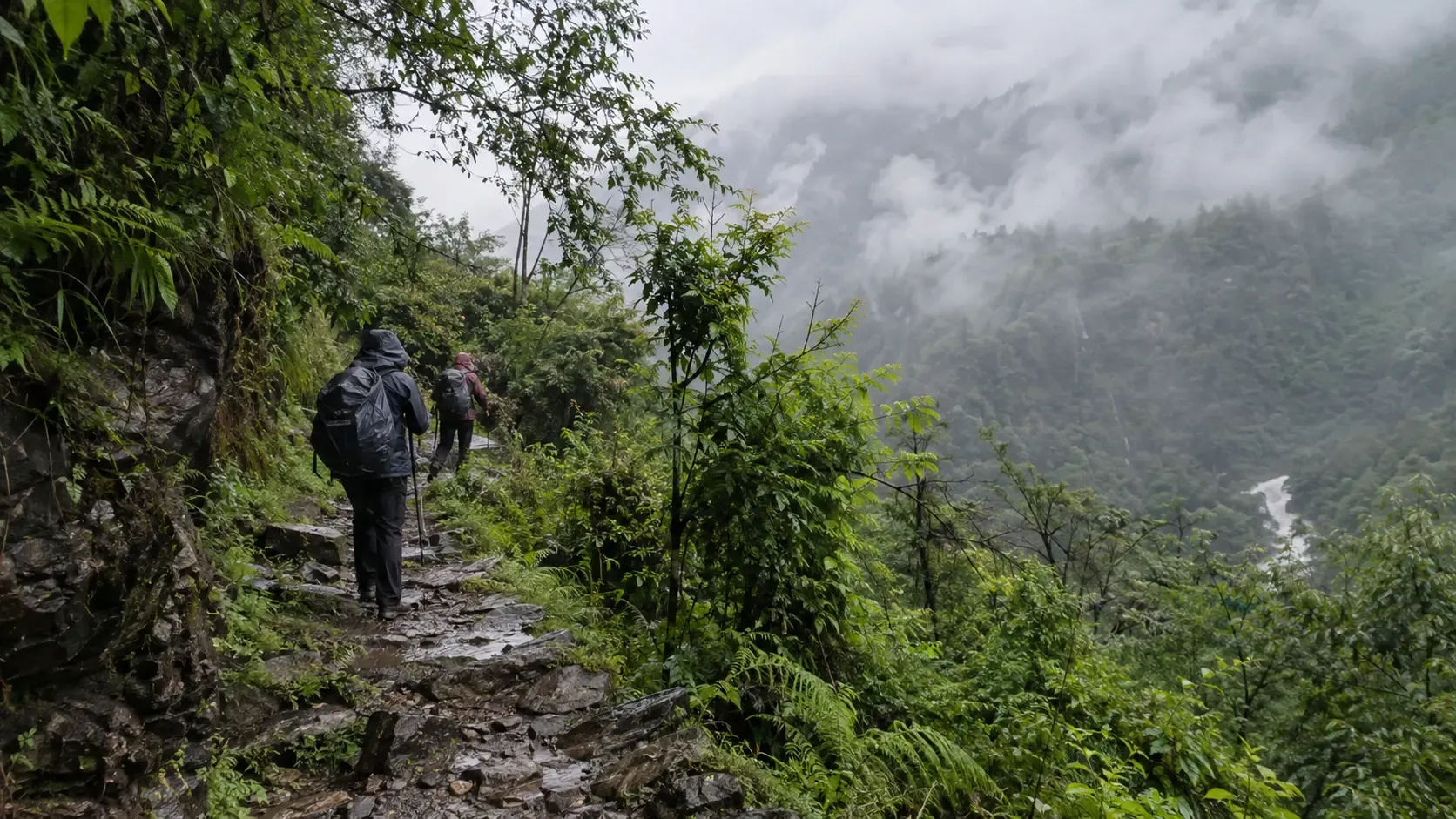
For standard Everest Base Camp, Annapurna Base Camp or Manaslu itineraries, June would not usually be our first recommendation.
But north of the main Himalayan barrier, the situation changes.
This is where the Upper Mustang Trek becomes especially interesting.
Mustang lies in a much drier trans-Himalayan rain-shadow environment.
That does not mean the entire journey is immune from the monsoon.
You still need to reach the region, and roads or flights elsewhere in Nepal may be affected.
This distinction is important:
Your trekking destination can be comparatively dry while the transportation used to reach it is still influenced by monsoon weather.
For Everest Base Camp, Annapurna Base Camp and many classic routes on the wetter side of the Himalayas, July would not be our first choice.
The main problem is not simply getting wet.
It is the loss of predictability.
Cloud may obscure the mountains.
Trails can become wet and slippery.
Road journeys may take longer.
Landslides can temporarily interrupt roads.
Mountain flights may need suitable visibility before they can operate.
A waterproof jacket solves only one of those problems.
If July is the only month you can travel, the answer is not necessarily “don't visit Nepal.”
The smarter response is:
Do not force an October itinerary into July.
Change the itinerary.
Upper Mustang is one of the first places we would consider.
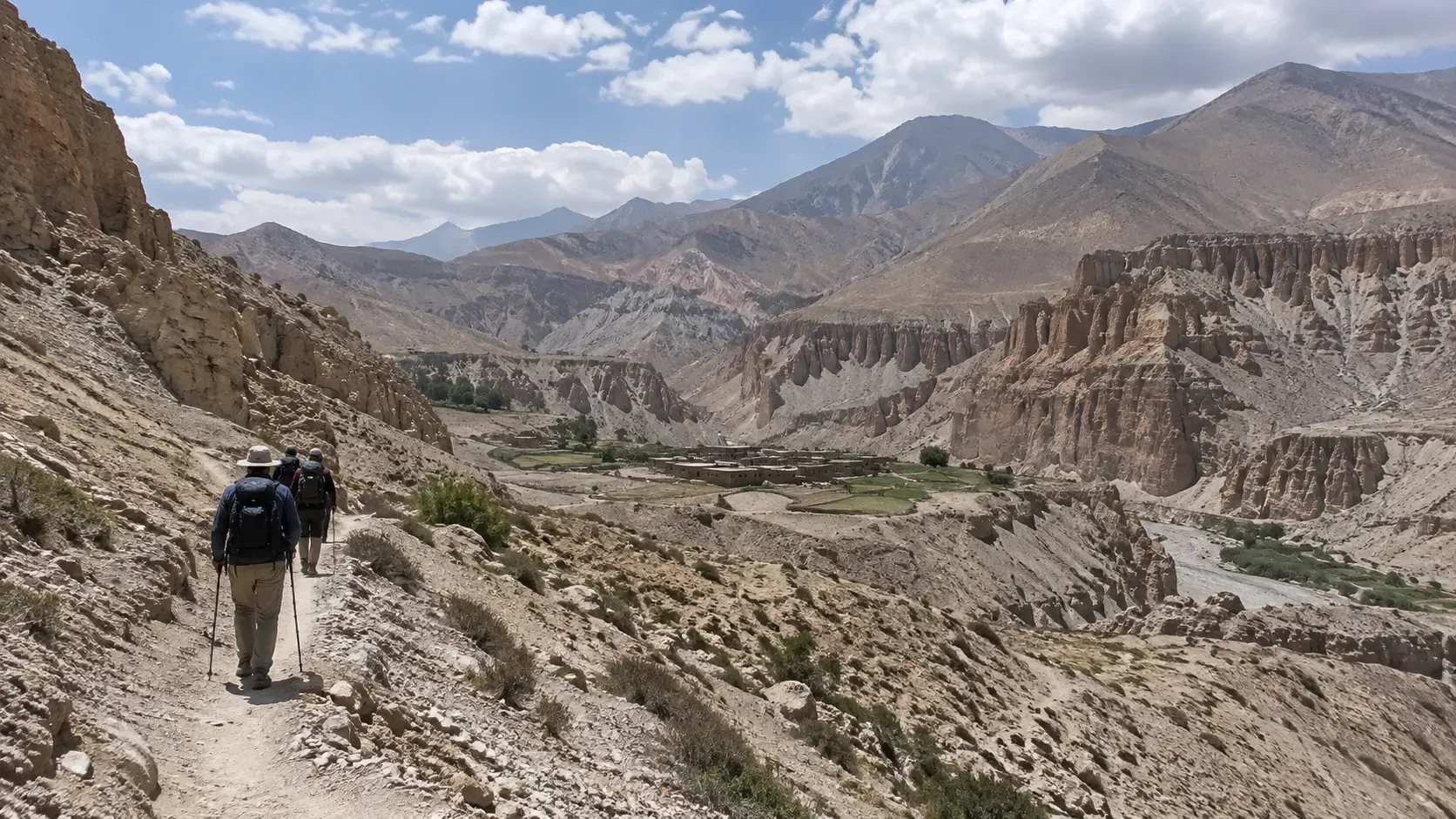
Depending on the specific route and current logistics, remote western areas can also be possibilities. The Lower Dolpo Trek, for example, offers a completely different type of journey from mainstream Everest or Annapurna trekking.
But Dolpo should not be sold simply as “a place where it does not rain.”
It is remote, access is more complicated and the itinerary requires more careful logistical planning.
August remains firmly inside the monsoon period across much of Nepal.
The landscape can be spectacularly green.
Rice terraces are active, waterfalls are full and the middle hills look completely different from their dry winter appearance.
For travelers interested in landscape, culture and slower travel, that can be a real advantage.
The problem appears when the itinerary depends on everything happening exactly on schedule.
A delayed road journey or mountain flight becomes much more serious when you have no spare day before your international departure.
If you travel during August:
Monsoon travel rewards flexibility far more than ambitious scheduling.
September is one of the easiest months for travel websites to oversimplify.
It is often placed neatly inside “autumn.”
The weather does not follow a marketing calendar.
Early September can still behave like the monsoon.
Trails may remain wet, lower forests can still have leeches, cloud can stay around the mountains and heavy rainfall can continue.
As the month progresses, conditions generally improve.
By late September, trekking traffic starts increasing and the transition toward the main autumn season is underway.
But the monsoon does not leave Nepal on exactly the same date every year.
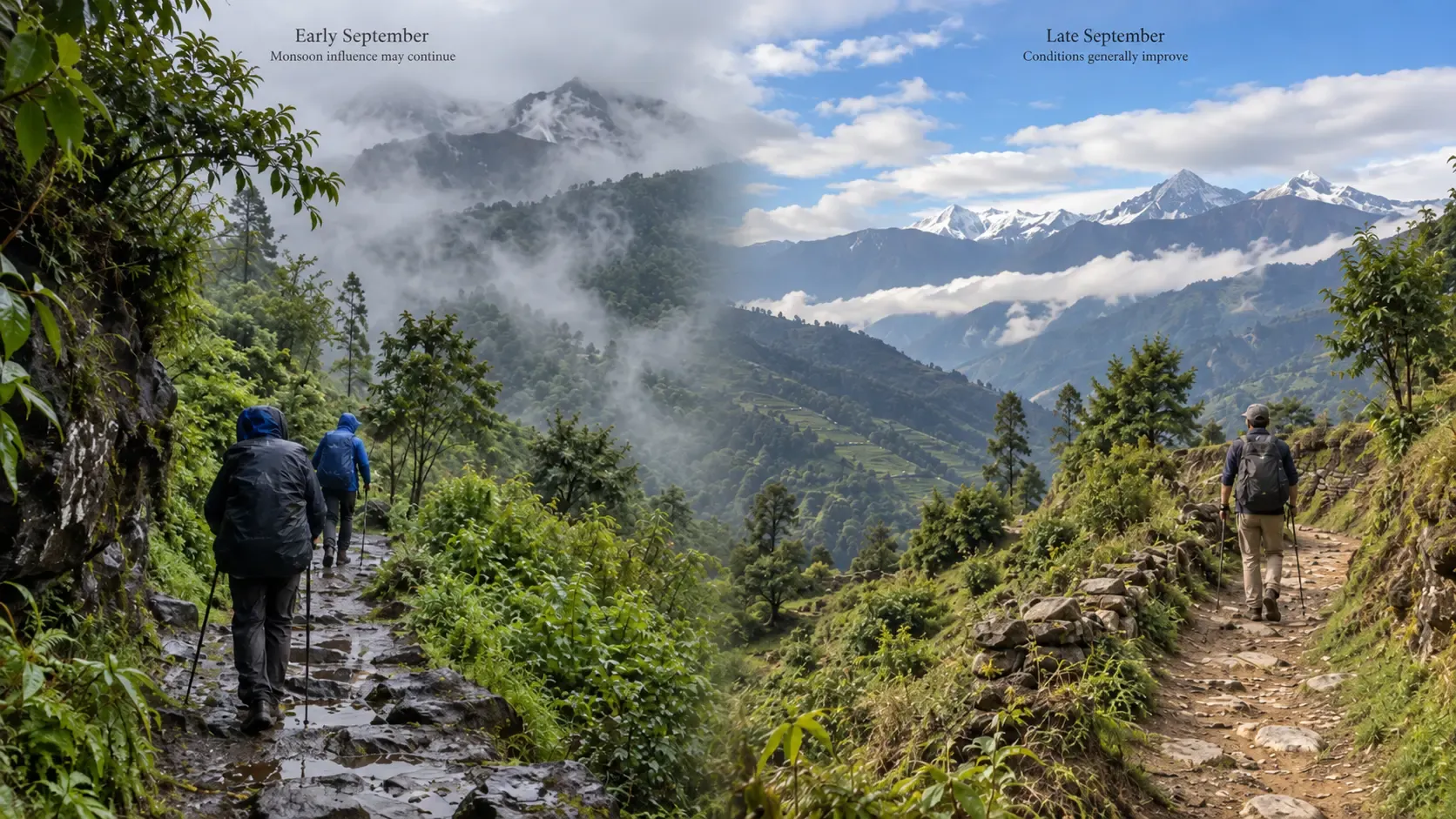
That means a departure on September 5 should not automatically receive the same recommendation as one on September 28.
For a classic Himalayan trekking itinerary, later September is generally the safer side of the month.
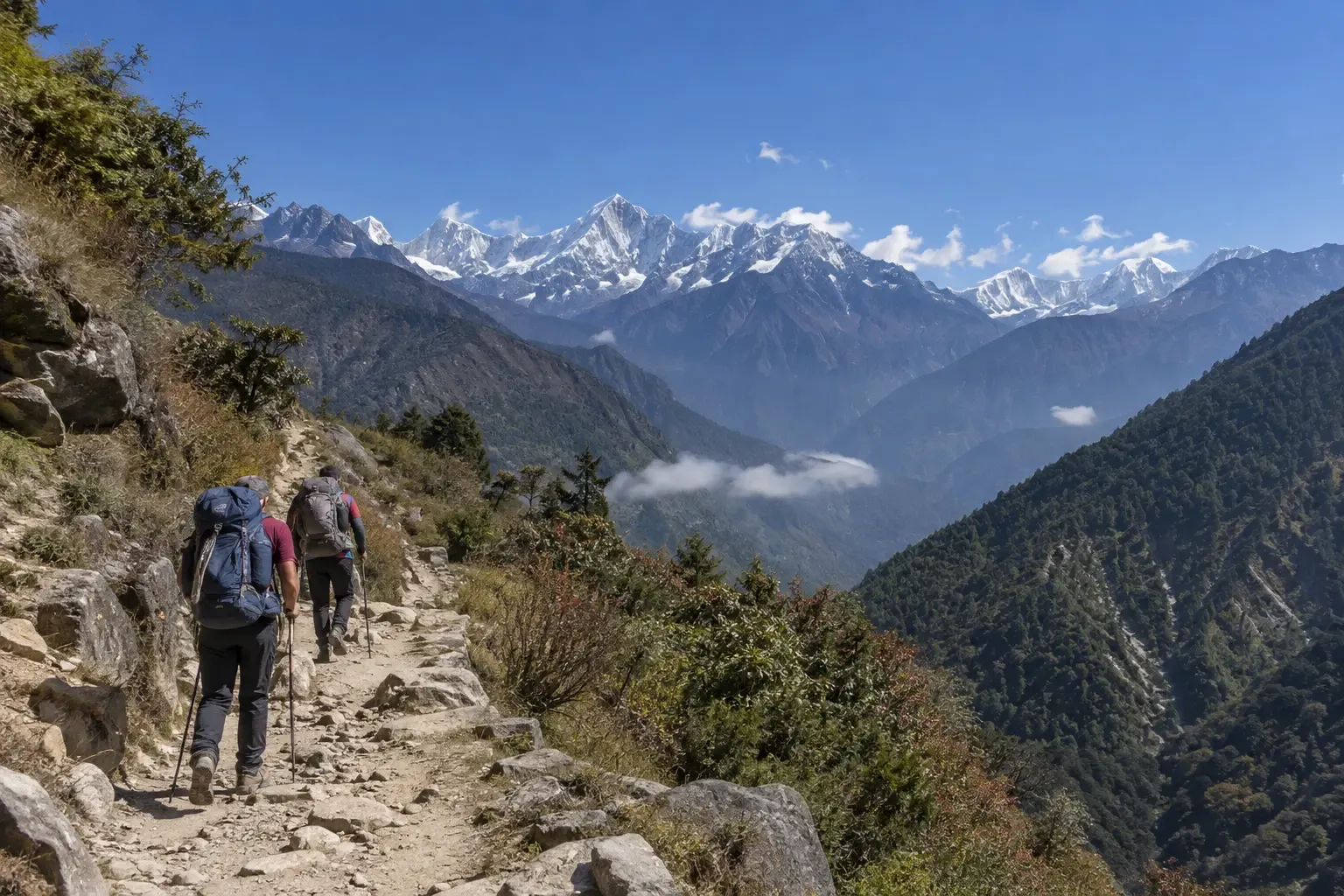
If someone forces us to choose one month for the widest range of first-time Nepal trekking itineraries, October is the easiest answer.
The monsoon has normally retreated.
Trails dry.
The landscape remains green.
Visibility often improves dramatically.
Most major trekking areas are fully active.
October suits routes including:
The disadvantage is obvious.
Everyone else knows October is good too.
Popular trekking trails become busy. Dining rooms are fuller. Accommodation has less flexibility, particularly when a group requires several rooms in the same village.
Everest travelers should also understand that busy-season Lukla flight arrangements can change. At some times, airlines operate Lukla services from Ramechhap rather than directly from Kathmandu, requiring a road transfer before the mountain flight.
The exact arrangement should always be reconfirmed close to departure.
October is still an excellent choice.
Just do not choose it because somebody promised you an empty trail.
Dashain generally falls around September or October, with exact dates changing every year.
It is one of Nepal's most important family festivals.
For travelers, the important part is not simply seeing a festival.
Many Nepalis travel to their home districts during the holiday period. Kathmandu can feel unusually quiet in some areas while domestic transportation becomes busier around key travel days.
Some businesses may follow different schedules during the major festival days.
Being in Nepal during Dashain can add an important cultural dimension to a trip, but you should not assume everyday transport and business patterns will remain completely unchanged.
If Dashain matters to you, check the exact dates for your travel year before buying flights.
November deserves serious consideration if your priorities are:
good mountain conditions + less heat + gradually quieter trails.
Early November can still be busy.
Later in the month, visitor numbers generally begin easing while the weather becomes colder.
That creates one of Nepal's most useful travel trade-offs:
You exchange warmth for space.
At higher trekking lodges, cold becomes part of the routine.
The dining room may have a stove while your bedroom does not.
You can finish dinner warm, walk down a cold corridor and get directly into your sleeping bag.
For someone properly equipped, this is manageable.
For travelers who prioritize photography, dry trails and a quieter trekking experience, late November can be particularly attractive.
Tihar normally follows Dashain and generally falls around October or November.
For visitors, it is one of Nepal's most visually distinctive festival periods.
Homes and businesses are decorated with lights, and different festival days honour crows, dogs, cows, Goddess Laxmi and the relationship between brothers and sisters.
If your itinerary includes Kathmandu during Tihar, the cultural experience can be completely different from an ordinary trekking stopover.
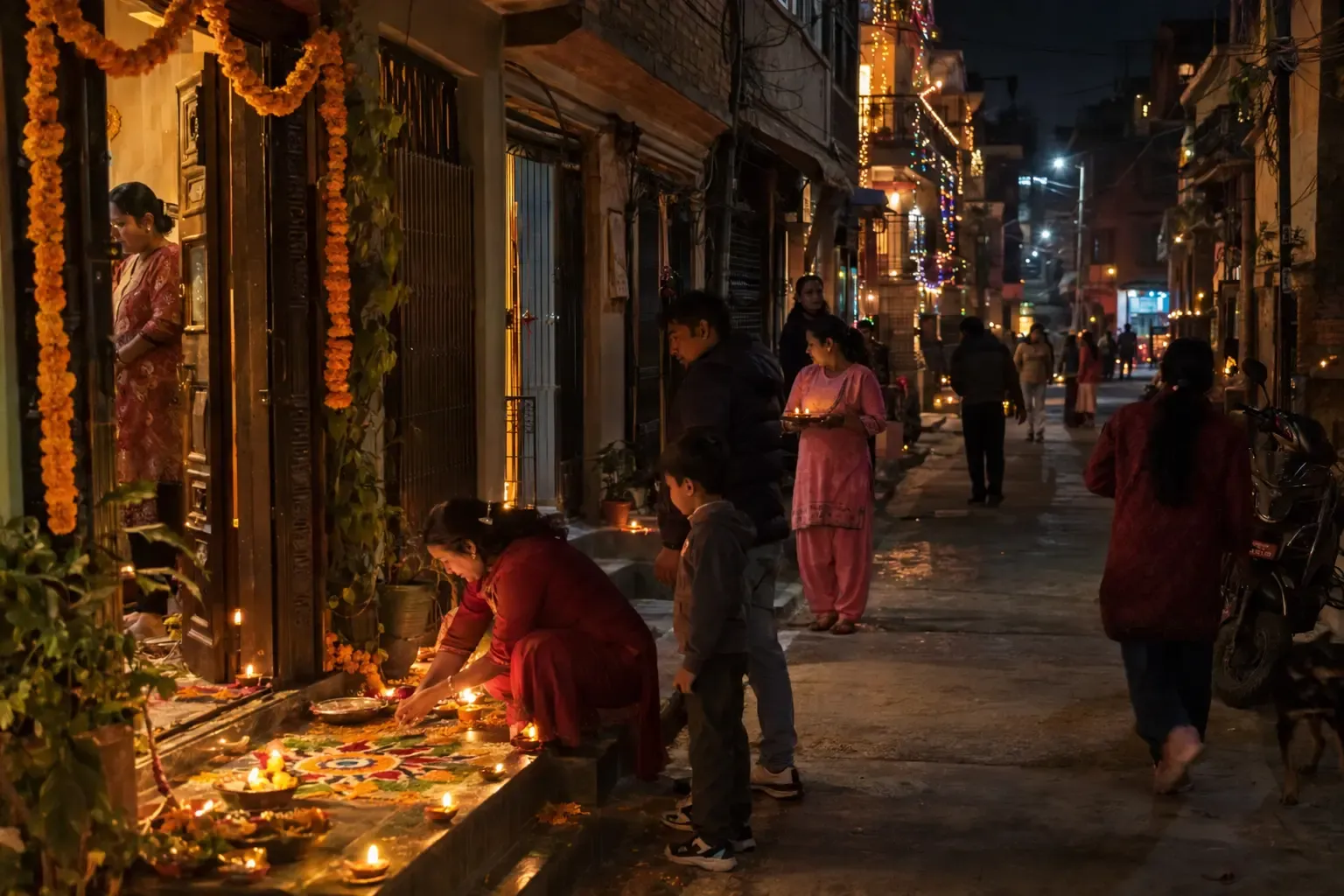
As with Dashain, the date changes according to the lunar calendar.
Check the actual dates for the year you are travelling rather than assuming Tihar always falls in the same week.
December is not the end of travel in Nepal.
It is the beginning of winter travel.
Kathmandu, Pokhara, cultural touring, day hikes and many lower trekking routes remain completely realistic.
Some higher trekking routes also remain possible when conditions are favourable.
The advantages are straightforward:
The disadvantages are equally real:
December works especially well when your itinerary does not depend on a difficult high pass.
For travelers who want mountain walking without going as high as Everest Base Camp, a route such as the Ghorepani Poon Hill Trek may be worth comparing with higher alternatives.
For high-pass trekking, current conditions matter more than the month printed on your booking confirmation.
Fresh snowfall during the previous two days may be more important than the average December weather from the previous twenty years.
For most Himalayan trekkers, this is the most useful seasonal comparison.
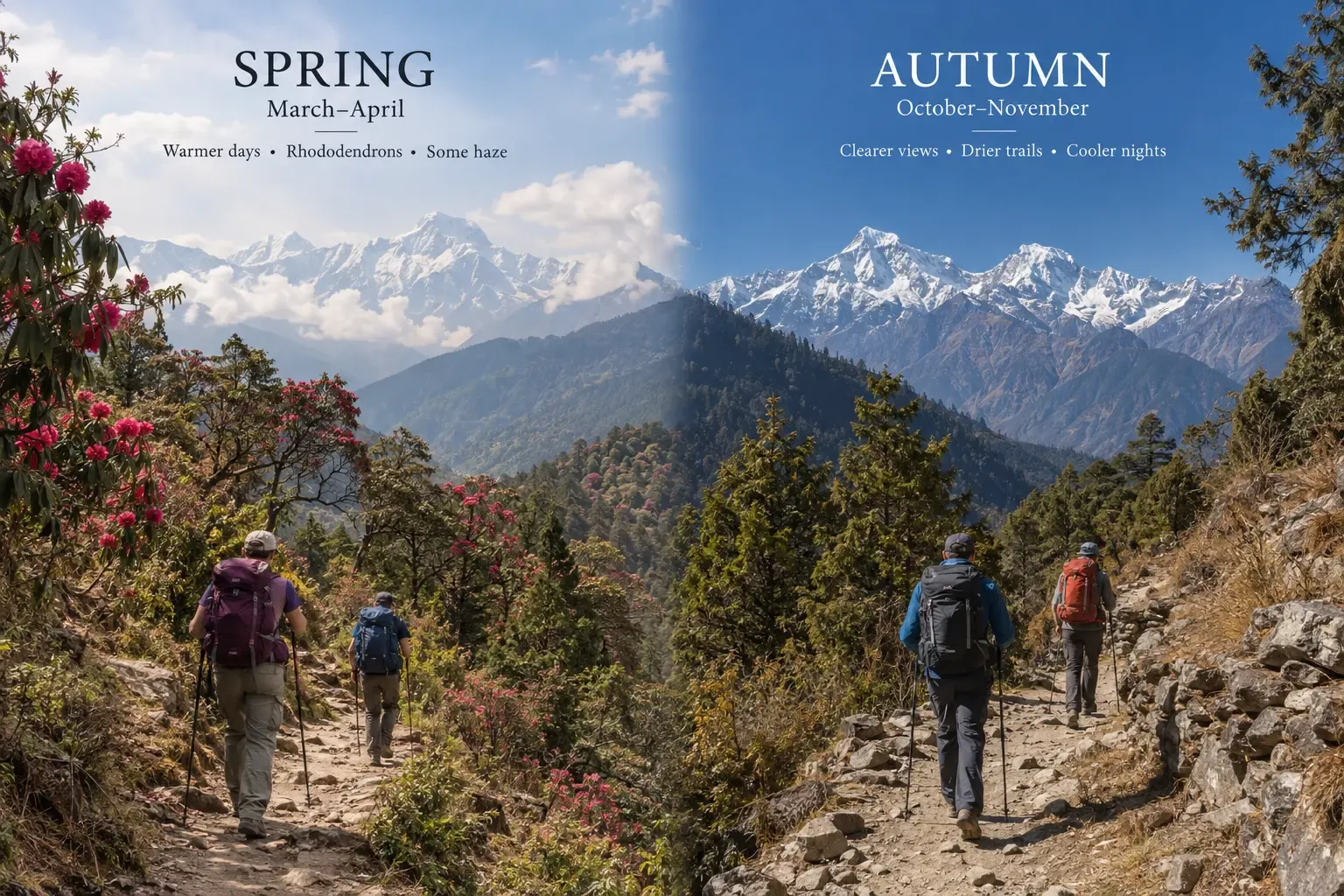
March and April are usually the strongest part of this period.
The compromise is that spring haze and increasing afternoon cloud can reduce long-distance visibility.
October and November form the heart of this window.
The compromises are crowds in October and increasing cold later in November.
If you hate cold, April may suit you better.
If photography and crisp distant mountain views matter most, November may suit you better.
If you want the easiest first-time trekking window and accept crowds, October is difficult to beat.
If you want fewer trekkers and can handle colder nights, late November deserves serious consideration.
For most first-time trekkers, March to May and October to November are the most straightforward periods.
Spring gives warmer conditions and climbing-season atmosphere.
Autumn usually provides cleaner post-monsoon visibility.
Winter trekking is possible, but the cold becomes much more significant once the itinerary reaches places such as Dingboche, Lobuche and Gorak Shep.
The monsoon adds cloud, wet lower trails and increased uncertainty around mountain aviation.
If Everest Base Camp is your main objective, examine the complete Everest Base Camp Trek itinerary, paying particular attention to where you sleep rather than focusing only on the altitude reached at Base Camp.
For experienced trekkers considering passes rather than the standard EBC route, seasonal snow becomes even more important on the Everest Three High Passes Trek.
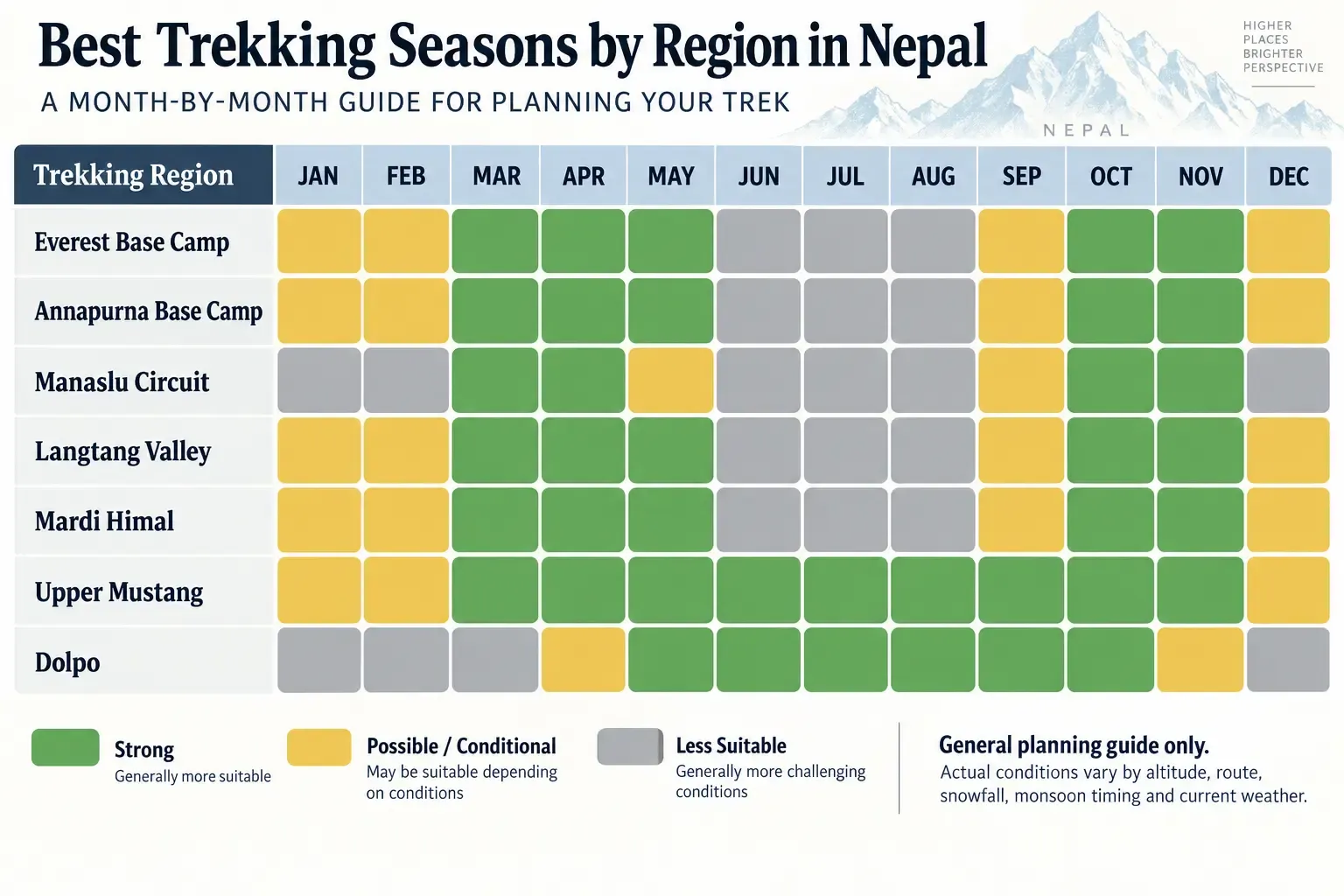
Spring and autumn are both strong choices.
Choose spring if forest scenery, rhododendrons and warmer walking conditions are important.
Choose autumn if clean mountain visibility is the priority.
The southern Annapurna side receives considerable monsoon moisture, so June through August is a very different experience from trekking north of the main Himalayan barrier.
Winter can work, but snowfall around the upper sanctuary can alter trail conditions.
The Annapurna Base Camp Trek is therefore better evaluated using the altitude profile and overnight stops rather than simply reading “best season: spring and autumn.”
For travelers wanting lower altitude and a shorter Himalayan trip, the Ghorepani Poon Hill Trek is another Annapurna option worth comparing.
For a complete Manaslu Circuit involving the Larke La crossing, spring and autumn are the logical starting points.
The lower route is affected by the monsoon.
Winter creates a different problem: snow around the pass.
This is exactly the sort of trek where saying “Nepal is fine in December” is not useful enough.
Kathmandu may be perfectly fine.
The real question is:
What are the current conditions around Larke La?
See the full Manaslu Circuit Trek to understand where the itinerary gains enough altitude for snow and cold to become important.
Langtang works especially well in spring and autumn.
Spring brings warmer walking conditions and changing forest scenery.
Autumn provides the classic dry and clear Himalayan feel.
Winter can also suit travelers who are prepared for colder conditions and value quieter trails.
The Langtang Valley Trek is reached overland rather than depending on a Lukla-style mountain flight, although road conditions still deserve attention during periods of heavy monsoon rain.
Mardi Himal is often attractive to travelers who want Annapurna scenery without committing to a longer base-camp itinerary.
Spring and autumn are the most straightforward choices.
Spring brings forest colour and warmer temperatures lower down.
Autumn gives stronger odds of clean mountain visibility.
Winter can also be possible for experienced and properly equipped trekkers when conditions allow, but snow higher on the ridge must be taken seriously.
See the Mardi Himal Trek when comparing it with Annapurna Base Camp or Poon Hill.
Upper Mustang breaks Nepal's standard seasonal rule.
Its position north of the main Himalayan barrier gives it a much drier environment during the summer monsoon than areas such as Pokhara and the southern Annapurna foothills.
That makes the Upper Mustang Trek one of the first itineraries we would consider when somebody says:
“I can only visit Nepal in June, July or August.”
But “rain shadow” does not mean every part of the journey is weatherproof.
Transport connections used to reach Mustang can still be affected by conditions elsewhere.
That is why buffer days can remain useful even when the trekking area itself is comparatively dry.
Dolpo can also work differently from Nepal's mainstream monsoon-affected trekking areas.
But Dolpo needs a separate warning.
Remoteness matters as much as rainfall.
Flights, trail access, passes, accommodation arrangements, route length and emergency logistics all deserve more attention than they do on a mainstream lodge trek.
Do not choose Dolpo only because someone describes it as a monsoon destination.
Choose it because you understand the trip.
The Lower Dolpo Trek provides a better picture of the duration and remote nature of a Dolpo journey.
Peak climbing should not be planned using the same logic as ordinary trekking.
A warm trekking day does not tell you what conditions are like on a glacier, summit ridge or high camp.
Spring and autumn are the main periods considered for many trekking peaks, but the best window depends on the particular mountain, recent snowfall, wind, route condition and team preparation.
If your objective is something such as Mera Peak, look beyond a generic “April is good” recommendation.
The trekking approach, acclimatization schedule, summit conditions and weather window all matter.
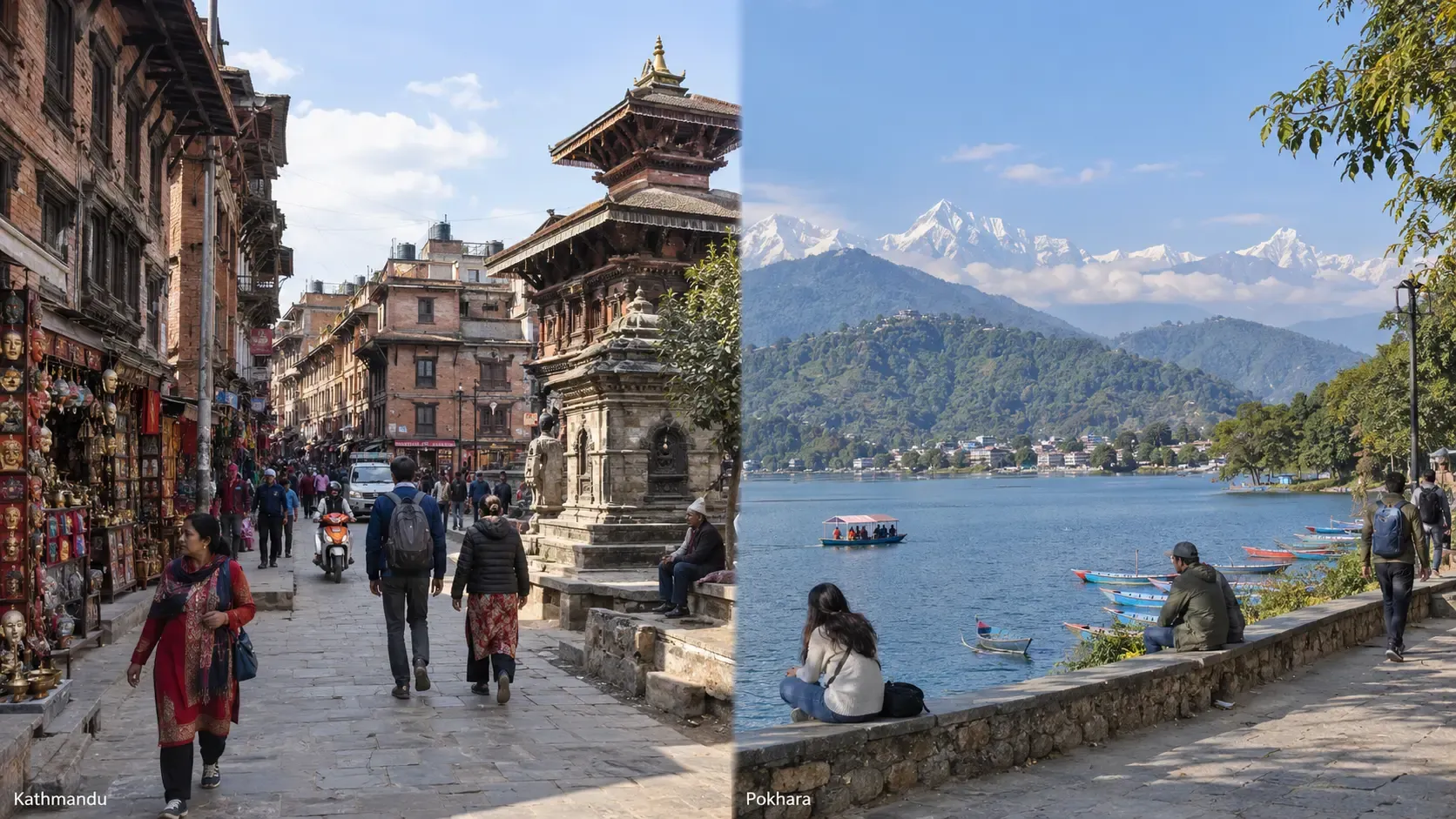
If you are not trekking, your seasonal decision becomes much easier.
Kathmandu can be visited throughout the year.
Autumn through spring generally provides more comfortable conditions for long sightseeing days than the hot and humid monsoon period.
Winter mornings can be cold, but daytime sightseeing can still be pleasant.
The monsoon does not close Kathmandu.
It simply changes the rhythm of the day.
You may plan around heavy showers instead of planning around snow, altitude or passes.
Pokhara needs slightly more consideration because it receives much more monsoon rain.
If your dream is sitting beside Phewa Lake with the Annapurna range clearly visible, autumn normally gives you better odds than July.
If your priority is lush green hills and waterfalls rather than Himalayan photography, you may judge the same month differently.
Travelers who want to experience several parts of Nepal without a major high-altitude trek can compare the Best of Nepal Tour.
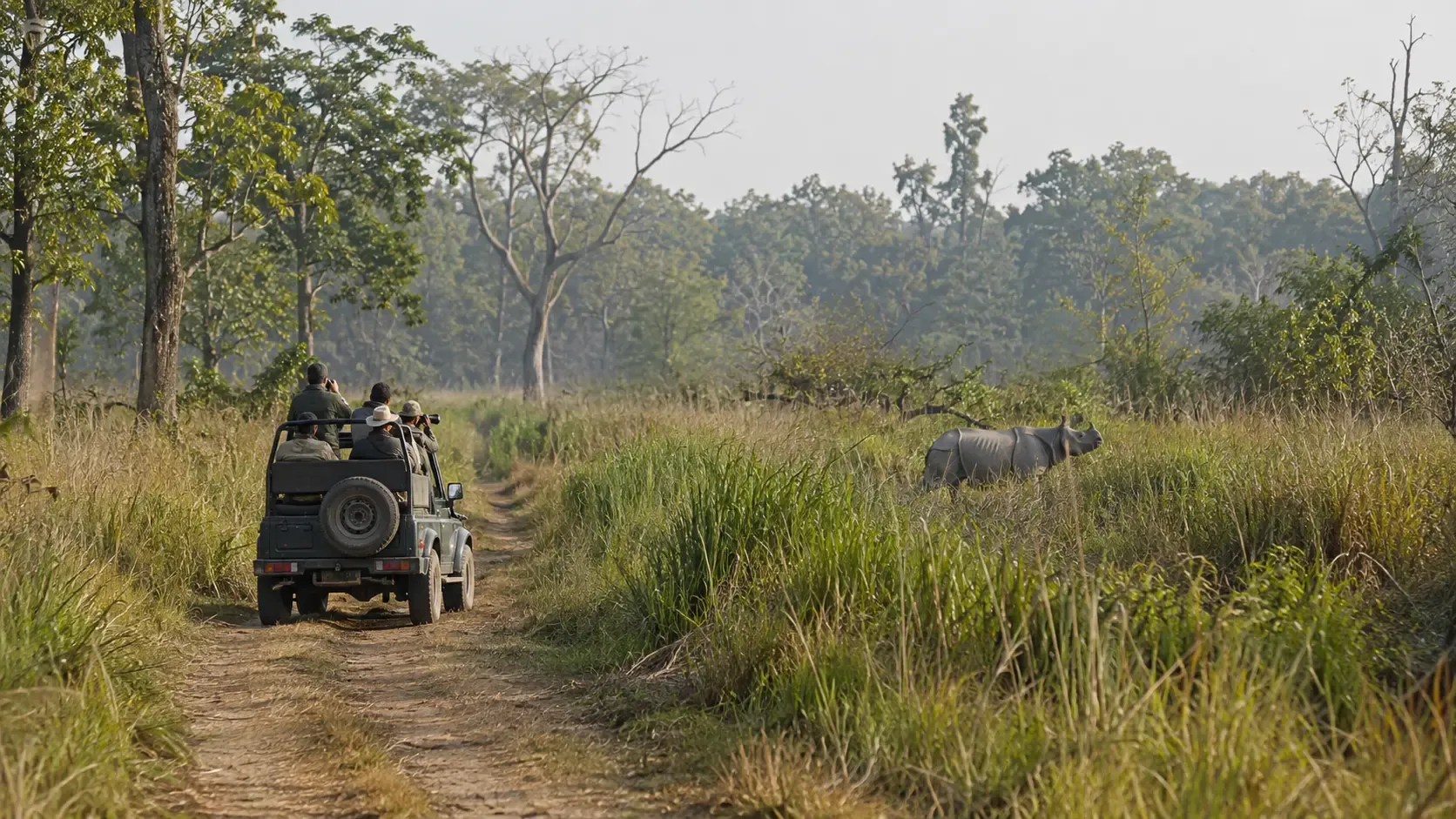
The southern plains should not be planned using Himalayan weather advice.
Winter is far milder in the lowlands than at altitude.
Late spring can become intensely hot.
The monsoon brings humidity, rainfall and different wildlife-viewing and road conditions.
For many travelers, autumn through winter provides a more comfortable overall experience.
If you are combining trekking and wildlife, months such as November, February and March can provide a useful compromise between Himalayan trekking conditions and lower-altitude temperatures.
The key lesson is simple:
Do not choose the date for your entire Nepal holiday using only the weather at Everest Base Camp.
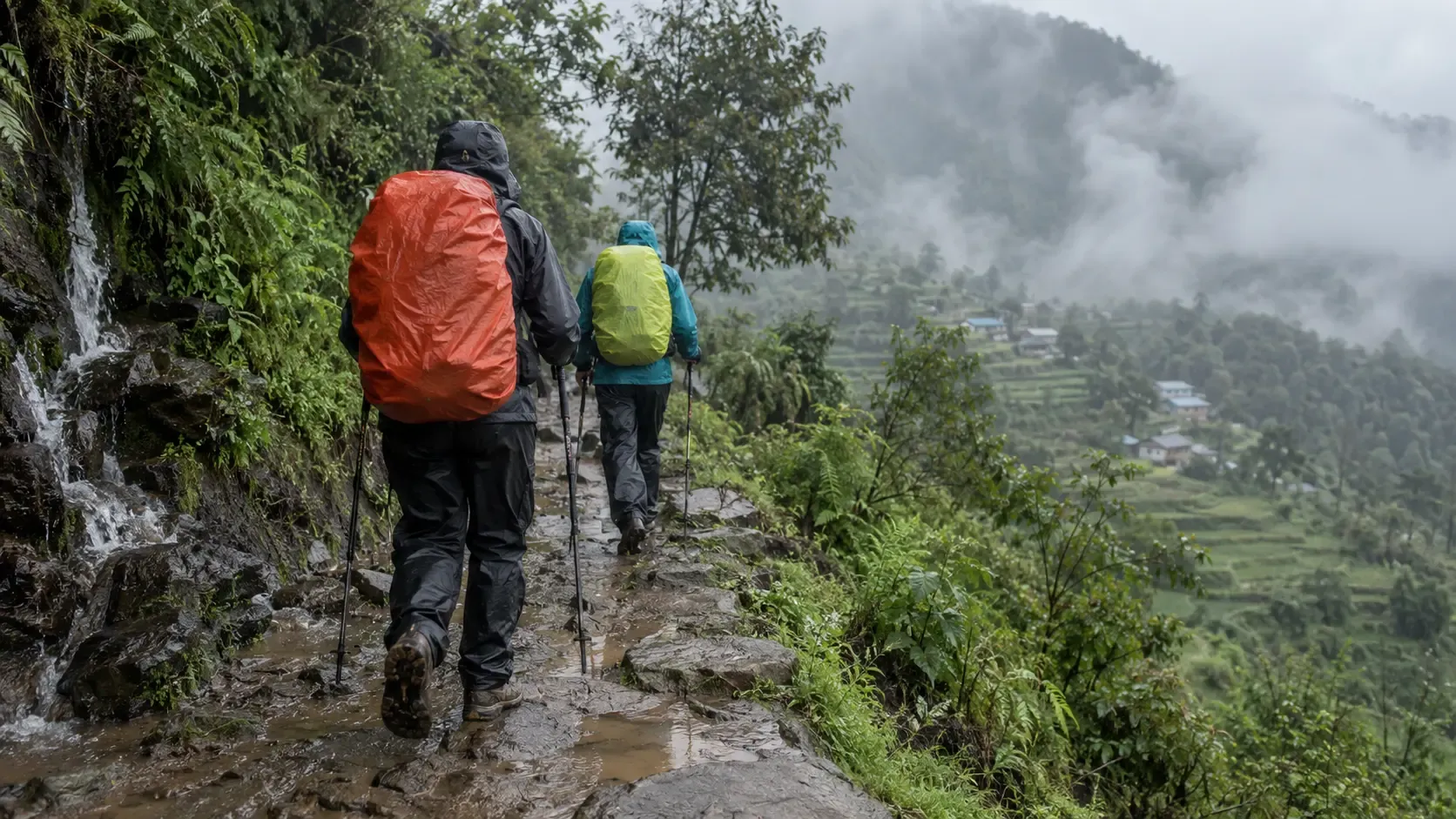
Do not immediately abandon the trip.
Change the way you plan it.
Instead of forcing a conventional Everest Base Camp, Annapurna Base Camp or Manaslu itinerary into July, investigate a rain-shadow route such as Upper Mustang.
Then build flexibility into the itinerary.
Monsoon travel in Nepal requires flexibility more than toughness.
You do not need to jump from October all the way to July.
There are much easier compromises.
Consider:
You usually give up some warmth.
In return, you can gain quieter trails, calmer lodge evenings and a less hurried experience.
For many travelers, that is a better trade than choosing the absolute warmest or busiest period.
Sometimes, but this should not be the main reason for choosing a difficult travel month.
Peak spring and autumn periods create stronger demand for popular hotels, domestic flights and trekking services.
Outside those periods, you may find better accommodation availability and occasional low-season promotions, particularly in Kathmandu or other cities.
But do not assume everything in Nepal becomes cheaper during winter or monsoon.
Permit fees and official conservation charges do not become bargaining items simply because there are fewer trekkers.
Mountain transport may not suddenly become inexpensive either.
And choosing a guide or porter based on who will accept the lowest off-season price is not a responsible way to plan a Himalayan trek.
There can also be hidden costs to traveling in a difficult season.
A cheaper room does not help much if a weather delay forces you to add another night, rearrange transportation or miss a connection.
When comparing seasons, consider the total trip, including:
For trekking trips, choosing a season that fits the route is generally more important than chasing the lowest possible daily price.
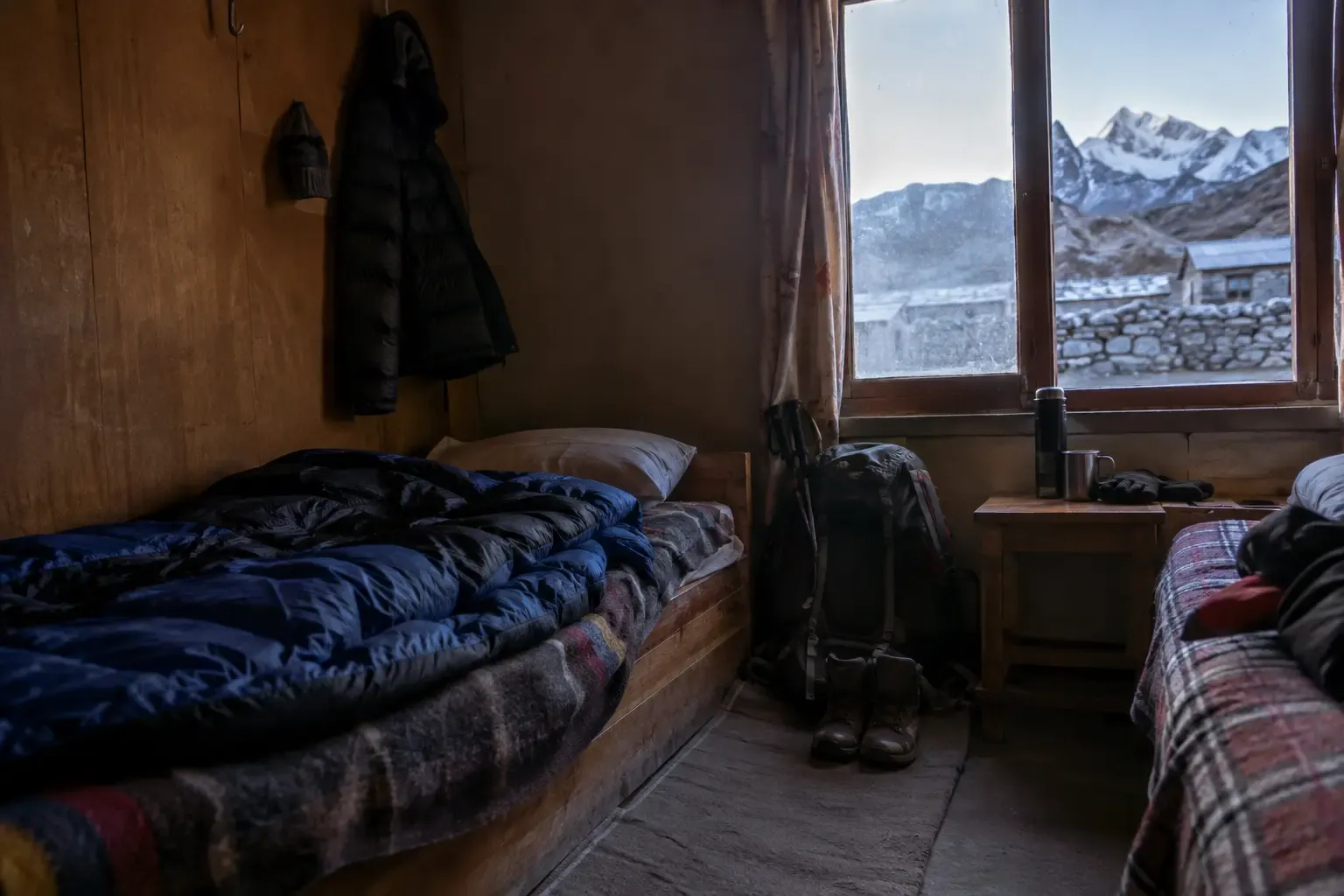
Forget Kathmandu's daytime temperature when choosing your mountain equipment.
The useful question is:
What could the coldest night at my highest overnight stop feel like?
Many high-altitude trekking rooms are simple and unheated.
Your sleeping bag, down jacket, base layers, gloves, hat and other cold-weather equipment therefore matter even when walking in sunshine feels surprisingly warm.
Do not choose a sleeping bag simply because somebody online says every Nepal trek requires the same temperature rating.
The right sleeping system depends on:
A gear decision tied to your actual itinerary is much more useful than copying one number from somebody else's trek.
Yes, but not in a simple “good season means flights always operate” way.
Lukla flights depend heavily on suitable aviation conditions.
During busy trekking periods, airlines may also operate flights to Lukla from Ramechhap/Manthali rather than directly from Kathmandu.
That means an Everest itinerary can require an early road journey before the flight.
During monsoon periods, cloud and visibility can create more disruption.
Even during a good trekking month, mountain flights should never be treated like a guaranteed city-to-city flight timetable.
If your trip includes Everest, leave sensible margin around the return from Lukla before your international flight.
Upper Mustang and Everest Base Camp should not have identical seasonal recommendations.
Start with what you want to do, then choose the month.
September 5 and September 28 can produce very different trips.
Early May and late May can also behave differently.
Monthly labels are useful, but weather does not reset itself on the first day of each month.
This becomes particularly important during the monsoon and on itineraries involving mountain aviation.
Historical averages cannot tell you what snow fell three days before your crossing.
Even in October, mountains can produce cloud, wind, snow, rain or flight changes.
Good planning does not eliminate uncertainty.
It gives you enough flexibility to handle it.
If you want the simplest recommendation:
October and November are the strongest overall months for classic Himalayan trekking.
Choose March or April if you prefer warmer spring trekking and seasonal vegetation.
Consider late November, early December, late February or early March if avoiding peak-season crowds matters more than having the warmest conditions.
If you can only travel in June, July or August, do not automatically give up on Nepal. Compare Upper Mustang, Dolpo and cultural itineraries with the standard monsoon-affected trekking routes.
If your dates are already fixed, that is not necessarily a problem.
Instead of asking:
“What is the best month for Nepal?”
Ask:
“What is the best Nepal trip for the month I already have?”
That question usually leads to a much better itinerary.
Once you have narrowed down your season, the next step is making sure the route actually fits your available time, trekking experience and expectations.
Browse our trekking trips in Nepal if you are still comparing regions.
If your plans are more focused on sightseeing, heritage and lower-elevation travel, explore our Nepal tours.
Before travelling, our Nepal Travel Tips cover practical preparation, while the Arrival in Nepal guide explains what to expect when you land in Kathmandu.
International travelers should also check the latest Nepal visa information before departure.
For anyone trekking in Nepal, our Eco Traveler Tips explain practical ways to travel more responsibly in mountain communities.
If you are choosing between two routes, two months or two very different parts of Nepal, you do not need to make the decision from a weather chart alone.
Tell us:
You can plan your Nepal trip with Epic Adventures or contact our team if you want help comparing the options.
The aim is not to sell you October when July is the only month you have.
It is to choose the part of Nepal that makes the most sense for your dates.